

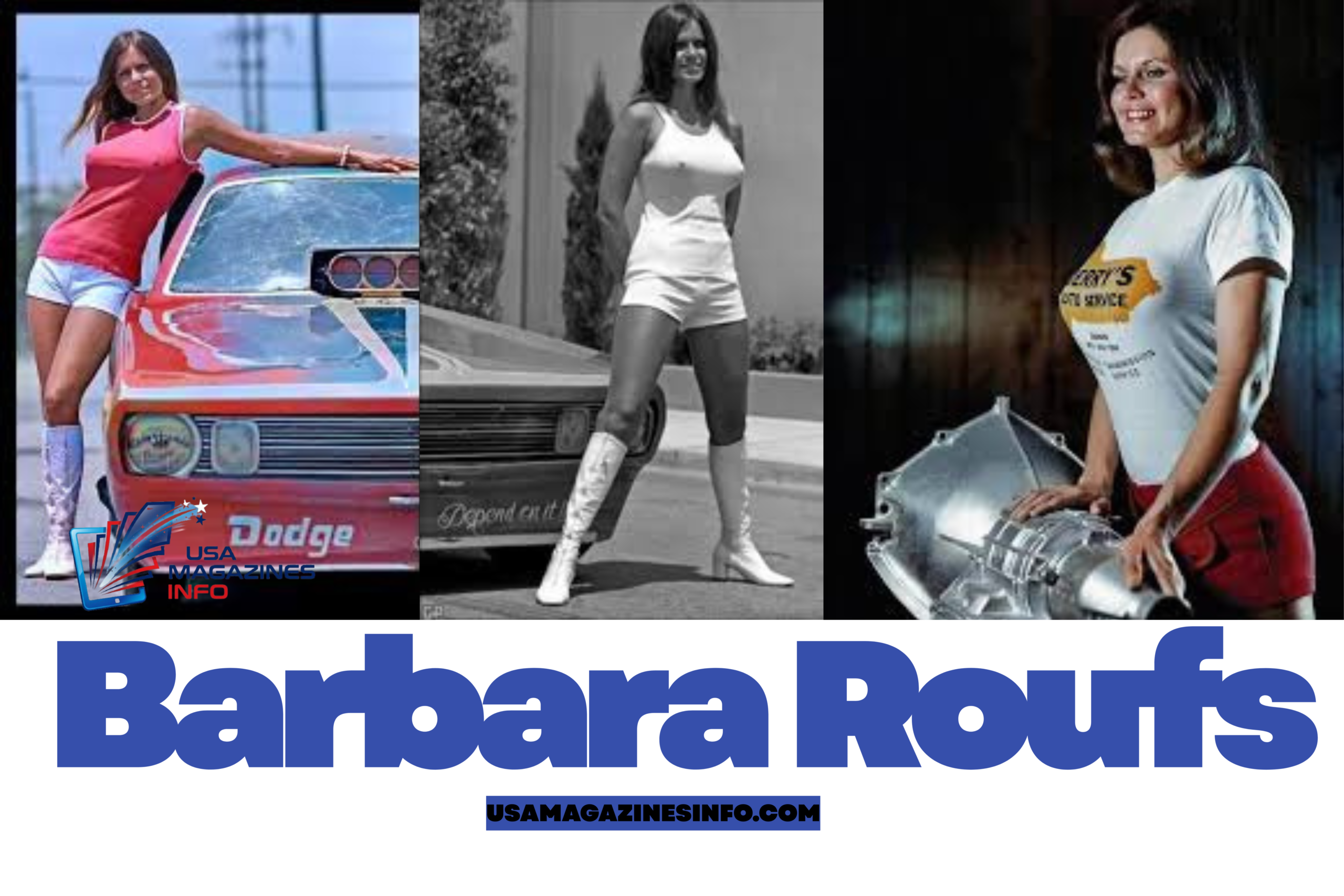
The 1970s marked a golden, high-octane era for American motorsports. It was a time defined by the roar of supercharged engines, burning rubber, and an electrifying subculture that captivated millions. Amidst the smoke of Southern California’s drag strips, one face became entirely synonymous with the glamour and thrill of the track: Barbara Roufs.
As a premier trophy girl, Roufs transcended the traditional, passive role often assigned to women in racing. With her signature look, magnetic presence, and effortless charisma, she transformed into an overnight cultural icon. Decades later, vintage photographs of her standing proudly next to legendary dragsters continue to circulate online, captivating new generations of automotive enthusiasts. But who was the woman behind the camera, and what is the true story of her life, career, and enduring legacy?
Key Details: Quick Biography
| Information Parameter | Biography Statistics & Personal Details |
| Full Name | Barbara Roufs |
| Date of Birth | January 16, 1944 |
| Place of Birth | Hollywood, California, USA |
| Date of Death | January 3, 1991 (Age 46) |
| Nationality | American |
| Profession | Professional Drag Racing Trophy Girl, Model |
| Active Years | Early 1970s |
| Famous For | Being the quintessential 1970s Southern California Drag Racing Icon |
| Estimated Net Worth | $100,000 – $500,000 (At the time of her peak career) |
The Early Life and Background of Barbara Roufs
To fully appreciate her meteoric rise to fame, it is essential to look at her roots. Born in the heart of entertainment—Hollywood, California—in 1944, Barbara was raised in an environment surrounded by creativity, style, and post-war American optimism. Southern California during the 1950s and 1960s was undergoing a massive cultural shift, heavily influenced by the emergence of hot rod culture and local car clubs. You may also like to read about Neil Joseph Tardio Jr : Unveiling the Life and Legacy of a Visionary Director
Growing up in California allowed her to witness firsthand the birth of modern drag racing. Long before she ever stepped onto a track professionally, the culture of speed and custom cars was woven into the fabric of her hometown. While specific details about her early schooling remain private, contemporaries often noted that her vibrant personality and natural ease in front of crowds were evident from a very young age.
Rising to Fame: How Barbara Roufs Became a Drag Racing Icon
The early 1970s brought an unprecedented wave of commercialization to drag racing. Strips like Lions Drag Strip, Orange County International Raceway (OCIR), and Irwindale Speedway were drawing massive crowds every weekend. Promoters realized that to keep audiences engaged between heats, they needed to elevate the entertainment value of the sport. Enter the era of the professional trophy girl.
The Catalyst for Her Career
Barbara entered the drag racing scene during her late 20s—a time when many models were considered past their prime. However, her maturity, confidence, and distinct style set her completely apart from younger, less experienced models.
- The Signature Look: Roufs perfectly captured the aesthetic of the era. With her iconic long, dark hair, bold fashion choices, and striking confidence, she immediately commanded attention whenever she stepped onto the tarmac.
- The PDA and NHRA Circuits: She quickly became a staple at major events, including the Professional Dragster Association (PDA) championships, working alongside legendary race promoters who recognized her ability to draw a crowd.
- The Drivers’ Favorite: It wasn’t just the fans who adored her; the drivers themselves looked forward to seeing her at the finish line. Winning a grueling race was a massive achievement, but receiving a trophy from Barbara Roufs was considered the ultimate crown.
Transforming the Role of the Trophy Girl
Before the 1970s, track models were often treated as background decoration. Barbara completely changed that dynamic. She engaged actively with the spectators, signed autographs, and possessed an undeniable knowledge and respect for the sport. She wasn’t just standing next to the cars; she became an integral part of the show’s overall energy and appeal.
Vintage Drag Racing Fashion: The Trendsetter of the Track
Beyond her associations with fast cars, Barbara Roufs was a massive fashion trendsetter. The 1970s were a time of radical self-expression, and the racetrack became her personal runway.
Defining the 1970s Tarmac Aesthetic
Her wardrobe choices perfectly mirrored the free-spirited, bold nature of Southern California culture. Some of her most memorable fashion statements included:
- Go-Go Boots: A staple of the era, her white go-go boots became a trademark look that fans looked for at every major event.
- Hot Pants and Crop Tops: She popularized daring, midriff-baring outfits that were perfectly suited for the blazing California sun and the high-energy environment of the pits.
- Bold Prints and Monochromes: From vibrant patterns to stark monochrome outfits, she knew exactly how to stand out against the metallic, sun-drenched backdrop of top fuel dragsters.
Her influence extended far beyond the track. Young women attending the races frequently emulated her style, copying her hairstyles and clothing choices. Photographers from major automotive magazines like Hot Rod and Car Craft routinely captured her outfits, cementing her status as a bona-fide style icon of American car culture.
The Darker Side of Fame: The Disappearance from the Spotlight
By the late 1970s, the landscape of professional drag racing began to shift. Corporate sponsorships started replacing the raw, independent spirit of the early drag strips. Tracks like the iconic Lions Drag Strip closed down, and the community that had nurtured Barbara’s fame began to fracture.
As the era changed, Barbara chose to step away from the blinding lights of the track and the flashbulbs of automotive photographers. For a woman who had been at the absolute center of Southern California’s car culture, her transition to a quiet, private life was stark. She focused on her family, raising her children away from the public eye.
Tragically, the vibrant life that had brought so much joy to racing fans came to an untimely end. On January 3, 1991, just days before her 47th birthday, Barbara Roufs passed away in Fresno, California. Her death was a profound loss to her family and the close-knit community of vintage drag racing enthusiasts who still remembered her golden years.
The Digital Resurgence: Why Internet Culture Reconsidered Barbara Roufs
For years, Barbara’s story remained preserved only in vintage magazines and the memories of those who attended the races. However, the internet age completely revitalized her legacy.
The Power of Archival Photography
The resurgence of her popularity can be largely attributed to legendary drag racing photographer Tom West. When West began digitizing his massive archive of 1970s track photos and sharing them on forums and social media, the images of Barbara immediately went viral.
[Massive 1970s Fan Base] ──> [Decades of Quiet Privacy] ──> [Social Media & Archival Revival]
- The Ageless Appeal: Modern automotive enthusiasts were struck by the raw authenticity of her photos. Unlike highly staged contemporary marketing, the images of Barbara captured genuine, unfiltered American motorsport culture.
- Pinterest and Instagram Nostalgia: Boards dedicated to “Vintage Americana,” “70s Fashion,” and “Classic Muscle Cars” frequently feature her image as the ultimate representation of the era.
- A Symbol of an Era: Today, she is viewed not just as a model, but as a historical anchor to a specific timeframe when drag racing was at its most daring and passionate.
Frequently Asked Questions About Barbara Roufs
What made Barbara Roufs different from other trophy girls of her time?
While many models were hired for short-term promotional work, Barbara became a permanent fixture of the Southern California racing circuit. Her maturity, confidence, and genuine rapport with both drivers and fans elevated her status from a promotional model to a legitimate sports celebrity.
Where did Barbara Roufs primarily work?
She was most famous for her appearances at Southern California tracks, including the Orange County International Raceway (OCIR), Lions Drag Strip, and various events hosted by the Professional Dragster Association (PDA).
How did the internet rediscover her?
Legendary motorsport photographers like Tom West uploaded high-quality, digitized versions of their 1970s track photos online. The striking imagery of Barbara immediately resonated with modern audiences looking for authentic vintage culture.
The Enduring Legacy of the 1970s Drag Racing Queen
Barbara Roufs remains a timeless symbol of an era that will never be replicated. She represented a time when motorsports were loud, dangerous, and incredibly stylish. Her contribution to drag racing culture was her ability to bring a sense of community, glamour, and human connection to a high-stress, dangerous sport.
Decades after she walked her last quarter-mile tarmac, her smile remains etched in the history of American car culture. For writers, historians, and car enthusiasts alike, remembering Barbara Roufs is a way of keeping the true, vibrant spirit of 1970s drag racing alive.
