

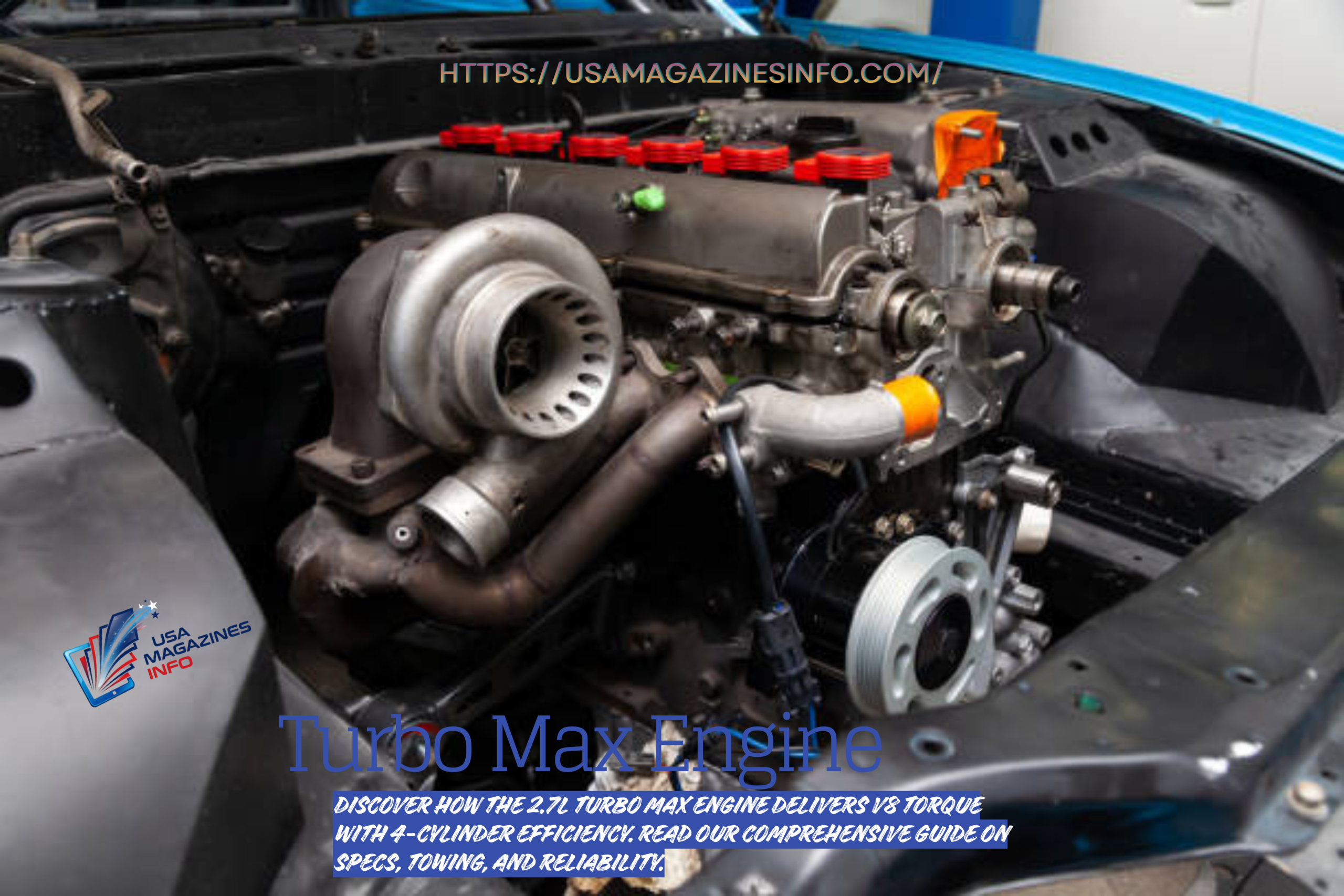
The pickup truck industry is undergoing a massive shift. For decades, the undisputed king of the American truck was the naturally aspirated V8 engine. Buyers demanded cylinder count, believing that more cylinders automatically translated to more work capacity, better durability, and undisputed reliability. However, modern automotive engineering has challenged this legacy mindset. Enter the Turbo Max engine—General Motors’ high-output, 2.7-liter turbocharged inline-four engine designed from a clean sheet specifically to handle the brutal, everyday demands of light-duty and midsize trucks.
Originally introduced to the market in 2019 as a standard option for the Chevrolet Silverado 1500, this powertrain underwent significant internal re-engineering. By 2022, General Motors unlocked its true potential, tuning it into a high-output variant that completely altered the entry-level truck landscape. To solidify its identity and separate it from standard passenger-car four-cylinders, GM officially rebranded this mechanical workhorse as the TurboMax™ engine.
Today, it serves as the standard powerhouse for the midsize Chevrolet Colorado and GMC Canyon, while anchoring the high-volume trim configurations of the full-size Chevrolet Silverado 1500 and GMC Sierra 1500. It is an engine designed to replicate the low-end, earth-moving pull of a turbo-diesel while maintaining the quick revving capabilities of a gasoline engine.
Quick Biography: Turbo Max Engine Key Details
To understand the scope of this modern powertrain, it helps to look at the baseline technical identity and production background of the Turbo Max engine platform.
| Attribute | Specification Details |
| Official Engine Code | GM L3B |
| Manufacturer | General Motors (GM) |
| Production Launch | 2019 (Rebranded as TurboMax™ in 2024) |
| Assembly Location | Spring Hill Manufacturing (Spring Hill, Tennessee, USA) |
| Configuration | Inline 4-Cylinder (I-4) |
| Displacement | 2.7 Liters (166.4 cubic inches) |
| Aspiration | Dual-Volute Turbocharged |
| Valvetrain | Dual Overhead Cam (DOHC) – 4 Valves per Cylinder |
| Horsepower | 310 hp @ 5,600 RPM |
| Torque | 430 lb-ft @ 1,500 – 4,000 RPM |
| Fuel Type | Regular Unleaded Gasoline |
| Primary Applications | Chevy Silverado 1500, GMC Sierra 1500, Chevy Colorado, GMC Canyon |
Comprehensive Technical Breakdown: What Makes the Turbo Max Engine Different?
Many automotive enthusiasts balk at the idea of a 4-cylinder engine under the hood of a massive full-size truck. However, the Turbo Max engine is not a fragile sedan engine fitted with a turbocharger. It was engineered from day one as a heavy-duty truck engine, incorporating industrial-grade, diesel-inspired architecture to survive high cylinder pressures and severe duty cycles.
1. Dual-Volute Turbocharger Technology
Traditional turbochargers can suffer from a delay in throttle response, commonly known as turbo lag. To eliminate this issue, GM equipped the L3B Turbo Max engine with an advanced dual-volute turbocharger. You may also like to read about Matarecycler Solutions to Simplify Your Recycling Process….
Unlike a standard single-scroll or even a twin-scroll setup, a dual-volute design features two separate exhaust gas inlets that feed into two distinct spiraling chambers (volutes) around the turbine wheel. This structure completely separates the exhaust pulses of the cylinders, allowing the exhaust energy to hit the turbine wheel with maximum kinetic force. As a result, the turbocharger spools up almost instantly, delivering massive low-end torque starting at just 1,500 RPM.
2. Diesel-Inspired Bottom End Architecture
To handle the immense cylinder pressures required to generate 430 lb-ft of torque from a 2.7-liter displacement, GM turned to structural strategies typically reserved for heavy-duty commercial diesel engines:
- Fully Forged Steel Crankshaft: Stiffened by 30% compared to traditional cast iron variants, providing incredible torsional strength and fatigue resistance under high loads.
- Stiffened Bedplate Design: Instead of standard individual main bearing caps, the Turbo Max utilizes a massive aluminum bedplate structure that ties the bottom end together, drastically increasing engine block rigidity and reducing vibration.
- Spun-In Iron Cylinder Liners: High-heat cast iron liners are cast directly into the aluminum block, ensuring optimal heat dissipation and structural stability within the cylinder bores.
- Cast-Iron Ring Carriers: The aluminum pistons feature integrated cast-iron upper ring grooves to endure the intense mechanical friction and thermal loads of continuous turbo boost.
3. Advanced Thermal Management and Oil Control
Continuous heavy towing builds massive thermal energy inside an engine. The Turbo Max counteracts this with an intelligent Active Thermal Management system. This system utilizes a multi-way rotary valve to precisely distribute coolant exactly where it is needed most, allowing the engine to warm up rapidly in sub-zero winter temperatures while offering targeted cooling to the cylinder head and turbocharger housing during high-temperature towing conditions.
Additionally, standard integrated piston cooling jets spray pressurized engine oil directly onto the undersides of the pistons. This constant oil bath rapidly pulls heat away from the piston crowns, preventing pre-ignition (knock) and extending the operational lifespan of internal components.
Turbo Max Engine Performance: Horsepower, Torque, and Real-World Capability
When examining real-world utility, horsepower is the metric that sells vehicles, but torque is the metric that actually moves loads. The performance profile of the Turbo Max engine shines specifically because of its flat, accessible torque curve.
[Traditional V6/V8 Engines] -> Require High RPM (4,000+) to reach Peak Torque
[GM 2.7L Turbo Max Engine] -> Reaches 430 lb-ft of Torque at just 1,500 RPM
This means that during everyday driving scenarios—such as climbing a steep highway grade or pulling a heavy trailer off the line—the transmission does not need to aggressively downshift to high, screaming RPM gears. The engine relies on its low-end turbocharger boost to maintain speed quietly and effortlessly.
Comparative Power Analysis
To understand where the Turbo Max sits in the competitive landscape, it is helpful to compare it directly against GM’s legacy truck engine option: the naturally aspirated 5.3-liter EcoTec3 V8.
- Horsepower Comparison: The 5.3L V8 produces 355 horsepower, giving it an advantage over the Turbo Max’s 310 horsepower when racing at high RPMs.
- Torque Comparison: The Turbo Max produces 430 lb-ft of torque, completely outclassing the 5.3L V8’s 383 lb-ft of torque. Furthermore, the Turbo Max achieves this peak torque thousands of RPMs earlier than the V8, giving it superior throttle responsiveness during city driving and initial towing acceleration.
Because the four-cylinder aluminum block construction weighs substantially less than a massive iron or heavy-cast V8 block, it reduces the overall front-end mass of the vehicle. This weight reduction yields an unintended benefit: a higher maximum payload capacity for the truck, as less of the vehicle’s total Gross Vehicle Weight Rating (GVWR) is consumed by the engine itself.
Towing Capabilities and Real-World Hauling Capacity
For truck owners, an engine is only as good as its real-world working limits. The Turbo Max engine was specifically tuned to match or exceed the towing performance of traditional naturally aspirated V6 and entry-level V8 configurations. Because the engine delivers its maximum 430 lb-ft of torque at an incredibly low 1,500 RPM, it mimics the behavior of a light-duty diesel engine, allowing the truck to get heavy loads moving from a dead stop with minimal strain on the powertrain.
Towing Capacity Breakdown by Vehicle Model
Depending on the chassis configuration, axle ratios, and whether the truck is configured with two-wheel drive (2WD) or four-wheel drive (4WD), the maximum trailering capacities break down as follows:
- Chevrolet Silverado 1500 / GMC Sierra 1500: When properly equipped with the available trailering package, a full-size truck powered by the Turbo Max can tow up to 9,500 pounds. This capacity is more than enough to pull midsize travel trailers, utility setups, or recreational boats.
- Chevrolet Colorado / GMC Canyon: In the midsize truck platform, the Turbo Max is the undisputed class leader. It comes standard with a maximum towing rating of up to 7,700 pounds, easily beating out many V6 competitors in the midsize segment.
The Role of Transmission Integration
To optimize this heavy-pulling torque profile, GM couples the Turbo Max engine with an advanced Hydra-Matic 8L90 8-speed automatic transmission. This gearbox is programmed with adaptive shift logic and a dedicated Tow/Haul mode. When towing up a steep highway grade, the transmission skips unnecessary downshifts, opting instead to hold a higher gear and lean heavily into the turbocharger’s boost. This prevents the constant, frustrating gear-hunting commonly experienced in small-displacement, non-turbocharged engines.
Fuel Economy and Efficiency Profiles
One of the foundational reasons GM designed the L3B platform was to fulfill stricter emissions regulations and meet consumer demands for better fuel efficiency without sacrificing utility. By downsizing the displacement to 2.7 liters and shedding hundreds of pounds off the front axle compared to a heavy cast-iron engine block, the vehicle operates with significantly less parasitic loss.
EPA Mileage Estimates
While final fuel economy varies depending on the tire size, drive configuration, and aerodynamic profiles of different trim packages (such as lifted off-road variants like the Trail Boss or AT4), the average fuel economy figures remain highly competitive:
- Full-Size Models (Silverado/Sierra 2WD): Approximately 19 mpg city / 22 mpg highway, achieving a combined rating of roughly 20 mpg.
- Full-Size Models (Silverado/Sierra 4WD): Approximately 18 mpg city / 21 mpg highway, depending on the aggressive nature of the tire tread.
- Midsize Models (Colorado/Canyon): Averaging 19 mpg city / 23 mpg highway for standard highway setups.
Real-World Driving Factors
It is important to understand the mechanical nature of turbocharged induction regarding fuel economy. When driven under a light load on flat highways, the engine acts as a highly efficient 4-cylinder, burning minimal fuel. However, when pulling a maximum load or driving with a heavy foot, the turbocharger continuously forces a high volume of compressed air into the combustion chambers. To maintain the ideal air-fuel ratio, the direct-injection system increases fuel flow accordingly. Therefore, owners who tow frequently can expect their real-world fuel economy to drop closer to traditional V8 averages during heavy work cycles.
Reliability, Common Issues, and Long-Term Maintenance
Whenever a manufacturer introduces a highly forced-induction engine to replace a larger, naturally aspirated engine, longevity questions naturally arise. The Turbo Max has been in continuous production across various GM platforms since 2019, giving fleet operators and independent mechanics a clear window into its long-term reliability matrix.
Common Mechanical Trends and Known Considerations
- Carbon Buildup on Intake Valves: Because the Turbo Max utilizes a pure Direct Injection (DI) system, fuel is sprayed directly into the combustion chamber rather than over the back of the intake valves. Over long periods, oil vapors from the positive crankcase ventilation (PCV) system can cause carbon deposits to form on the dry intake valves. Using high-quality synthetic oil and regular top-tier fuel helps minimize this, though high-mileage engines may eventually require top-end valve cleaning.
- Cooling System Complexity: Due to the implementation of the Active Thermal Management system and its multi-way rotary cooling valves, the cooling loop is highly complex. Ensuring that the coolant is flushed at recommended intervals prevents the premature wear of these electronic switching valves.
- Turbocharger Longevity: Turbochargers operate at incredibly high thermal thresholds and rotational speeds. GM mitigated premature turbo failure by routing both oil and engine coolant channels directly through the turbo bearing housing. This design allows the cooling system to pull heat away from the bearings even after the engine is turned off, preventing oil coking.
Essential Maintenance Schedule Checklist
To maximize the operational lifespan of a Turbo Max vehicle, owners should strictly adhere to a proactive preventative maintenance routine:
- Oil Change Interval: Replace the engine oil and filter every 5,000 to 7,500 miles. Always use a high-quality full synthetic oil meeting GM’s dexos1 Gen 3 specification to properly protect the turbocharger bearings.
- Spark Plug Replacement: Due to high cylinder pressures and turbo boost heat, spark plugs wear faster than in non-turbo engines. Inspect or replace them every 60,000 miles to maintain optimal fuel ignition.
- Air Filter Inspections: A turbocharged engine breathes a massive volume of air. Check the engine air filter at every oil change, especially if operating the truck in dusty agricultural or construction environments.
Final Verdict: Is the Turbo Max Engine Right for Your Next Truck?
The Turbo Max engine represents a clear, undeniably capable evolution in modern truck design. By delivering a peak output of 310 horsepower alongside an impressive 430 lb-ft of low-end torque, it effectively fills the operational space previously occupied by thirsty, heavy V6 options and standard entry-level V8s.
For fleet buyers, daily commuters, weekend towers, and off-road enthusiasts who value immediate throttle response, superior payload capacity, and lower low-end operating costs, this dual-volute powerhouse delivers everything required of a modern work truck. It is a purpose-built truck engine engineered to face rigorous vocational work head-on, solidifying its place as a cornerstone of General Motors’ modern powertrain portfolio.
